
Reimagining the CDL, Part I: The Case for a 32‑Team League
The Case for a 32‑Team Call of Duty League
Call of Duty has one of the largest, most dedicated player bases in gaming, yet its top league is capped at just 12 teams. That never truly made sense, but the CDL was built to mirror traditional sports franchises and prioritize stability. Seven years later, that model looks small, restrictive, and out of step with the rest of esports.
If CDL truly wants to grow, it should target a 32‑team League built on partnership agreements instead of permanent franchises. This structure would keep the stability owners want, while opening the door to more organizations, more players, and far more creative formats. When you compare CDL to other ecosystems, the gap is impossible to ignore: League of Legends has dozens of teams across multiple regional leagues, Valorant runs a partnered ecosystem with large regional leagues, and Apex Legends fields deep Pro Leagues across multiple regions. Call of Duty can do the same, and it should.
1. More Teams, More Brands
Right now, CDL’s growth is driven by a small cluster of heavyweight brands. Organizations like OpTic Gaming and Gentle Mates move the needle because they arrive with built‑in fanbases, content pipelines, and personalities that casual viewers actually care about. A 12‑team league means there are only so many of those bets you can make. A 32‑team league means 20 additional swings at landing the next era‑defining brand.
Expansion isn’t just about quantity; it’s about variety. Right now, several major regions are clearly underrepresented. Europe has been underserved for years. The Pacific region shows up at the top level with players like Amer "Pred" Zulbeari, Denholm "Denz" Taylor, or Conrad "Shockz" Rymarek, but not at the scale it could. LATAM and MENA have passionate FPS audiences that rarely get a proper stake in CDL. Adding 20 more spots allows the league to recruit a truly international slate of partners, while still keeping the competition primarily NA‑based for logistical sanity.
Imagine a 32‑team grid like this:
North America (15): OpTic, FaZe, 100 Thieves, NRG, Team Liquid, G2, Bush, OMiT, Sentinels, SSG, Shopify Rebellion, Envy, FlyQuest, Stallions, Huntsmen.
Europe (8): Gentle Mates, Team Heretics, KOI, Team Vitality, NAVI, Karmine Corp, Fnatic, Alliance/OG.
Pacific (3): T1, Gen.G, Paper Rex or Mindfreak.
MENA (3): Team Falcons, Twisted Minds, ROC.
LATAM (3): LOUD, FURIA, KRÜ.
This isn’t a perfect or final list. Still, it’s a blueprint for what a truly international CDL could look like: regional rivalries, cross‑continental storylines, and more fanbases with skin in the game. The league can still centralize most competition and logistics in North America, while leveraging these brands to bring international LANs, watch‑parties, and fan events to new markets.
Edit: There is some confusion about how this process would go. I would highly recommend incremental increases over a set window. For example:
2027: 16 Teams (4 Team Expansion)
2028/29: 24 Teams (8 Team Expansion)
2030/31: 32 Teams (8 Team Expansion)
There have to be long-term goals that drive organizations to invest & give fans excitement, knowing that the League is focused long-term.
-1778174908761.webp)
📸 Photo by @MLG
2. Creating Stars, Retaining Vets
Right now, the CDL operates in a tight window of opportunity. With only 12 teams, there are 48 starting spots at any given time. That has two big side effects:
It’s hard for new stars to break through and stay.
Veterans can disappear from the league artificially fast.
Look at how the NBA distributes its star talent: the top of the MVP ladder usually spans a wide spread of teams, not just one or two super‑rosters. In the 2025 MVP race, the top 11 in the voting were all from different teams. With 30 partners, even a mid‑table organization can host an MVP‑caliber player because there is enough room in the ecosystem for standout stats and standout narratives to coexist.
With 32 CDL teams, you’d have 128 starting spots. That means:
More room for new stars: Young players who would otherwise be stuck in Challengers get real opportunities on rebuilding rosters, mid‑table orgs, or regionally focused teams. Instead of one or two rookie stories per year, you could have half a dozen rookies making waves across different regions.
Longer careers for veterans: In the current system, a veteran can go from contending for a championship to being out of the league in 18 months. One bad season, one poor team fit, and there are simply not enough chairs when the music stops. With 32 teams, those players are far more likely to land on lower‑tier but still fully professional rosters, where they can mentor younger teammates, anchor storylines, and remain part of the League’s identity.
This continuity matters. Fans build deep connections with names they see year after year. When entire eras of players vanish overnight, the League loses institutional memory, rivalries, and built‑in narratives. A larger league doesn’t just mean more players; it means a healthier ecosystem for careers and for storytelling.
-1764805447831.webp)
📸 Photo by @CODLeague
3. Way More Format Options
Formats are where a 32‑team league becomes genuinely exciting. The current CDL structure is heavily constrained: with only 12 teams, there’s a limit to how creative you can get without either overloading the schedule or diluting stakes.
It’s also why the “classic” Open Bracket feeding into the Pro Tournament has always felt awkward to me in a modern, broadcast‑driven ecosystem. Historically, the Open portion had to be crammed into a single day, with matches finishing late at night and the qualified teams turning around to play pools or bracket matches almost immediately. Many of those matches were off‑stream or buried on secondary broadcasts, giving viewers little time or context to attach themselves to those teams.
The newer qualification paths, where Challenger teams earn spots through Elite seasons and past opens, did solve a lot of the issues I personally had with old-school opens. Fans can track their progress over time, learn rosters, and build expectations before these teams ever touch a main stage. The Open feeling is still there, but the storytelling is much stronger.
Now imagine layering that onto a 32‑team CDL:
Stage‑to‑stage variety. You can run a different format each stage without destabilizing the league: a full 32‑team Swiss into bracket one stage, a 16‑team invitational the next, regional cups or split groups after that.
16‑team “premium” events with qualifiers. One example: top 12 teams in season standings auto‑qualify; remaining 4 spots are decided in a studio LAN in Columbus between the bottom 20. Fans already know the brands, the players, and the stakes, but you still get that do‑or‑die qualifier feeling.
Mega events and specialty formats.
Regional invitationals (e.g., the eight EU orgs playing a European LAN with CDL branding).
A 32‑team event modeled after old‑school Call of Duty Champs: group stages into a double‑elim bracket.
A “CS‑style” Major: Swiss stage into a 16‑team playoff bracket.
Straight 32‑team single‑ or double‑elimination brackets for mid‑season cups or off‑cycle tournaments.
With 32 partnered teams, every one of these formats uses known brands and known rosters. The “open” energy comes from qualifiers and play‑ins, not from trying to bolt a rushed open bracket onto the back of an already packed pro schedule.
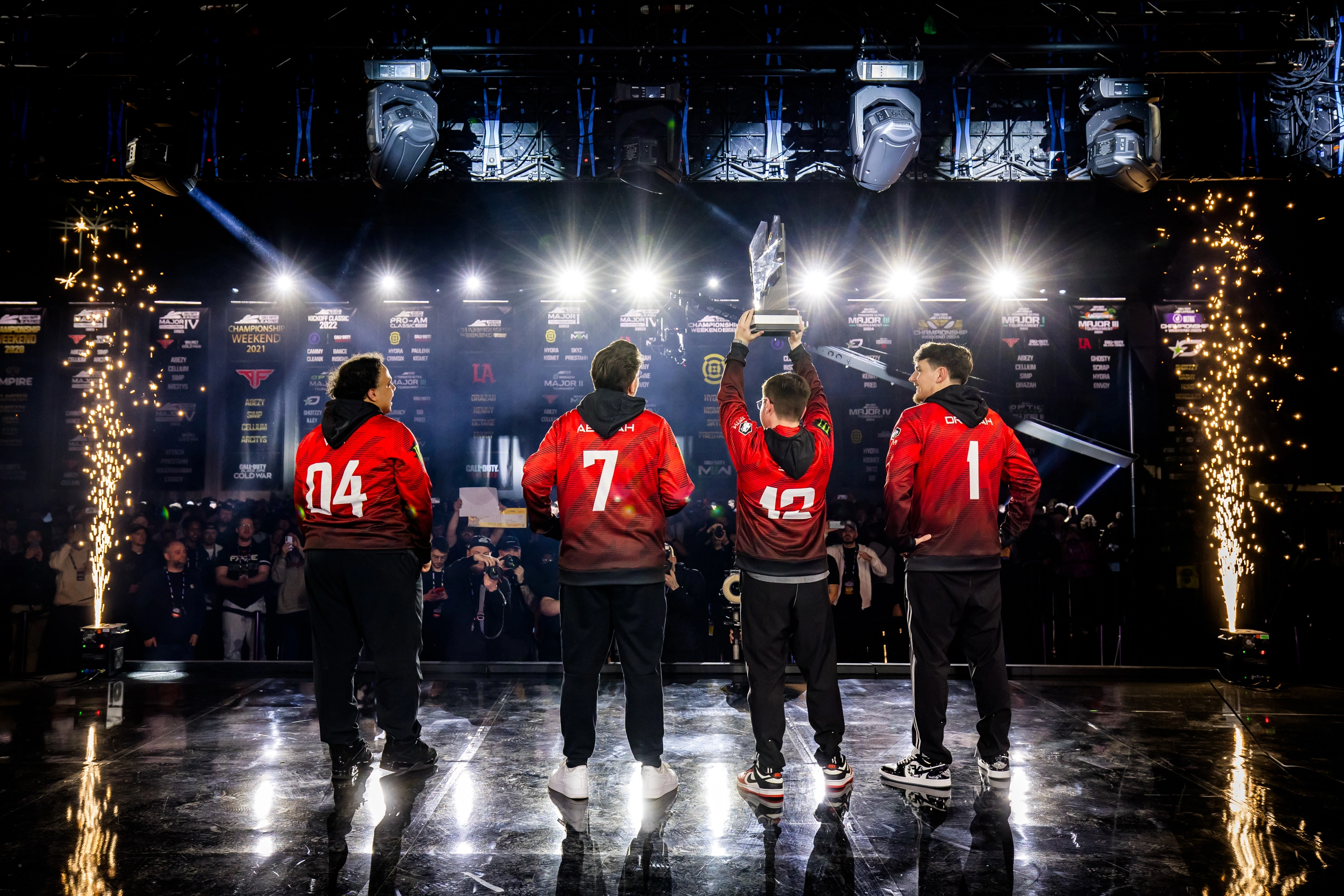
📸 Photo by @CODLeague
4. Partners, Not Franchises
The last piece, and maybe the most important, is changing how teams exist within CDL. The franchise model was originally pitched as a way to provide stability: permanent, city‑based slots with long‑term investment from ownership groups. That stability had clear benefits early on: guaranteed salaries for players, structured operations for teams, and a predictable schedule and slate of brands for fans.
But permanent, locked‑in slots come with a downside: there’s very little pressure on underperforming or disengaged organizations. If you own a spot and you know you can’t be relegated or replaced, the temptation to do the bare minimum is real. With only 12 teams, every “coasting” org has an outsized effect on the League’s overall competitiveness and perception.
A partnership‑based model fixes a lot of this without sacrificing stability:
Multi‑year partnership agreements instead of permanent franchises. Teams sign multi‑year partnership deals with the League, with clear expectations around competitive investment, content, and community engagement.
Performance and engagement clauses. Organizations that consistently fail to invest, refuse to build their brand, or do not contribute to the League’s growth can simply not be renewed or be terminated early. That opens space for ambitious new orgs that meet the criteria.
Stability for players and fans, accountability for orgs. From the outside, fans still see a consistent slate of partnered teams over multiple seasons. Players still have structure and security. But behind the scenes, CDL retains the power to reshape the ecosystem over time, rewarding partners who lean in and phasing out those who don’t.
In a 32‑team world, this model shines. When there are more partnership slots available, the loss of a single org doesn’t destabilize the entire league. Instead, it becomes an expected part of the ecosystem: a revolving door for underperforming or disengaged partners, and a clear path in for hungry organizations that want to invest.
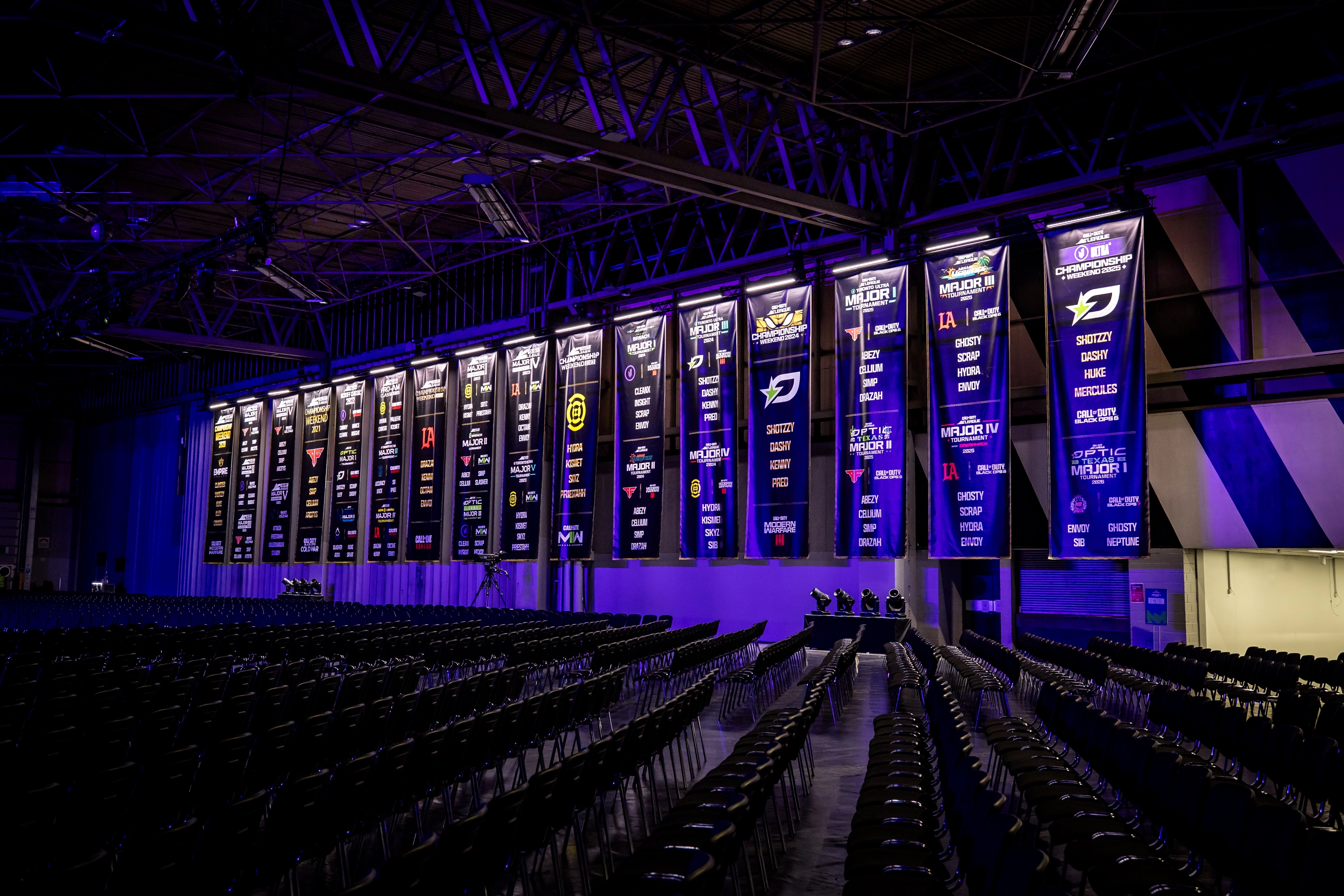
📸 Photo by @CODLeague
5. Rebuilding Regional Strength for the Long Term
One of the biggest differences between Call of Duty and titles like Valorant, CS, or League of Legends is simple: they have the regional density to sustain fully regionalized circuits, and we don’t, at least not yet. Riot’s new VCT model leans into this reality by stacking the calendar with LANs and Cups across multiple territories, but even there, a top North American team might realistically only see a handful of LANs per year (3-4), with most events concentrated in its home region. Valorant can pull that off because its regional fanbases are massive and engaged; if CDL tried to copy‑paste that structure tomorrow, NA would dominate viewership while regions like APAC or LATAM likely struggled to draw meaningful numbers on their own.
A 32‑team CDL with intentional regional representation offers a different path: you keep the league anchored in North America for now, but you seed genuine stakes and storylines in Europe, LATAM, APAC, and MENA through partnered orgs that actually represent those regions. Over time, that consistency, seeing the same EU, Pacific, or LATAM brands on every broadcast, at every Major, can slowly rebuild and grow local fanbases that have faded in Call of Duty. Once those regional communities are strong enough, CDL can naturally evolve toward the same global model we see in CS, LoL, and the future VCT: more regional LANs, more international crossovers, and a calendar where “worldwide” really does mean worldwide rather than “mostly NA with a few guests.”
Conclusion: Open Spirit, Structured Future
The Call of Duty community has always loved the idea of “anyone can make it”, the classic open‑bracket fantasy where a squad of nobodies runs the gauntlet and takes down giants on Sunday. The modern CDL doesn’t need to choose between that spirit and structural stability. A 32‑team league, built on partnership agreements instead of permanent franchise slots, offers both.
You get more brands, more regions represented, more players, and far more creative formats. You keep the health of the ecosystem, salaries, support, and structure for players, while reintroducing real pressure and accountability for organizations. Most importantly, you give Call of Duty room to breathe and grow into the esport it has the audience to be, instead of staying locked in a 12‑team box while the rest of the industry moves on.
I’ll be doing more pieces on my vision for the CDL, including specific format options for a 32‑team league and why I believe talent depth simply won’t be an issue in an ecosystem this large. I also want to dive into why expansion isn’t just “nice to have” but genuinely necessary, and that the esport is being significantly held back by not choosing a path forward.